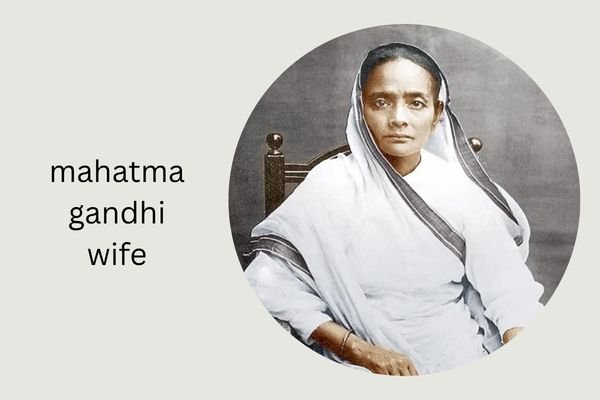

Mahatma Gandhi Wife
Mahatma Gandhi’s wife was Kasturba Gandhi, an Indian freedom fighter and social reformer born on 11 April 1869 in Porbandar, Gujarat. She was also widely known as Kasturba or affectionately as “Ba.” Mahatma Gandhi, whose full name was Mohandas Karamchand Gandhi, became one of the most influential leaders of India’s independence movement and is remembered around the world for his philosophy of truth and nonviolence. Kasturba Gandhi was much more than the wife of a famous leader.
She participated in India’s freedom struggle, supported social reform, endured imprisonment, and worked alongside Gandhi in both South Africa and India. The couple married when they were teenagers, following the customs of 19th-century India. Their long and often challenging married life was closely connected with Gandhi’s political and social work. This article covers Kasturba Gandhi’s early life, marriage, family, role in the freedom movement, children, imprisonment, final years, and lasting legacy.
Who Was Kasturba Gandhi?
Kasturba Gandhi, originally known as Kasturbai Kapadia, was born on 11 April 1869 in Porbandar, in present-day Gujarat. She belonged to a Gujarati family and was the daughter of Gokuldas and Vrajkunwar Kapadia. Kasturba grew up in a period when educational opportunities for girls were limited, particularly in traditional Indian families.
Kasturba became connected with the Gandhi family at a very young age. According to the Gandhi Heritage Portal, she became engaged to Mohandas Gandhi in childhood, as was customary in their social environment at the time. Gandhi and Kasturba married in 1883, when both were about 13 years old. Their married life initially began at the Gandhi family home in Rajkot.
There is limited reliable evidence about Kasturba receiving extensive formal schooling. Like many girls of her generation, her early education was restricted. Her later life, however, was shaped by practical experience, social activism, travel, political participation, and her work in Gandhi’s ashrams.
Over time, Kasturba developed an important independent role within the Gandhi household and the wider reform movement. She accompanied Gandhi during important stages of his life and became involved in campaigns concerning civil rights, sanitation, women’s participation, and social equality.
Her significance cannot be understood only through her relationship with Gandhi. Kasturba herself became a participant in nonviolent resistance and accepted imprisonment for political causes. In 1913, for example, she was arrested during the struggle in South Africa and sentenced to three months of rigorous imprisonment.
Kasturba died on 22 February 1944 at the Aga Khan Palace in Pune, where she had been detained during the Quit India period. She remains an important figure in the history of India’s independence movement.
Kasturba Gandhi’s Career & Professional Life
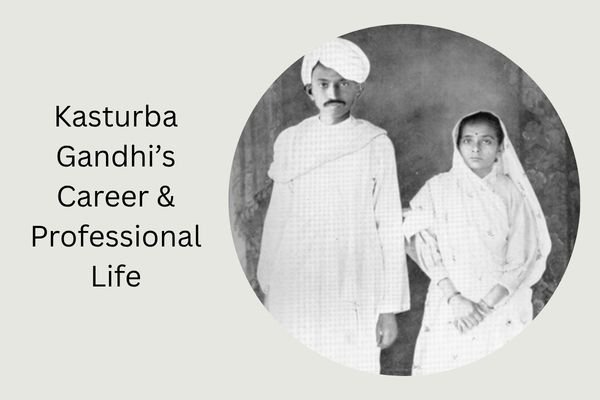
Kasturba Gandhi did not have a conventional professional career in the modern sense. Her public life was primarily connected with India’s independence movement, social reform, community work, and Gandhi’s constructive programs.
Her role became particularly visible during Gandhi’s years in South Africa. Gandhi went to South Africa in 1893, and Kasturba later joined him there. The Gandhi family and their associates became involved in campaigns against discriminatory laws affecting the Indian community.
Kasturba eventually participated directly in civil resistance. Her arrest in September 1913 became one of the notable moments in her public life. The Gandhi Heritage Portal records that she and other women were arrested on 22 September 1913 and that she received a three-month rigorous imprisonment sentence. She was released from prison in December of the same year.
After the family returned to India, Kasturba continued to participate in Gandhi’s activities. She became associated with his ashram life and social programs. Gandhi established the Satyagraha Ashram at Kochrab in Ahmedabad in 1915, and Kasturba was closely involved in the community surrounding Gandhi’s work.
Her activities included encouraging cleanliness, supporting women, participating in community programs, and helping people living in the ashrams. She also became a symbol of women’s participation in nonviolent resistance.
Kasturba was imprisoned several times during the independence movement. Her willingness to accept the consequences of political activism demonstrated that her contribution was not simply domestic support for Gandhi.
Unlike modern public figures, Kasturba did not have a personal business empire, salary profile, or publicly documented net worth. Therefore, claims about her “net worth” should not be presented as fact. Her historical importance is better measured through her contribution to India’s freedom struggle and social reform.
How Did Mahatma Gandhi and Kasturba Gandhi Meet?
Mahatma Gandhi and Kasturba Gandhi knew each other from childhood. Their relationship developed within the social customs of 19th-century Gujarat, where child engagements and marriages were common.
The Gandhi Heritage Portal states that Gandhi became engaged to Kasturbai Kapadia in childhood. The engagement took place in 1876, and the couple later married in 1883. The portal notes that Kasturbai was the daughter of Gokuldas and Vrajkunwar of Porbandar.
Their marriage was therefore not a modern dating or engagement story. Both were very young when they married. Their relationship evolved significantly as they grew older and Gandhi’s public responsibilities expanded.
In the early years of their marriage, Gandhi and Kasturba experienced many ordinary family challenges. Gandhi later wrote about aspects of their early married life in his autobiography, The Story of My Experiments with Truth.
As Gandhi became increasingly involved in political activism and social reform, Kasturba’s role also changed. She eventually became an active participant in many of the causes associated with his work.
Their relationship was not always simple. Gandhi’s increasing commitment to discipline, reform, and his political ideals affected family life. Yet Kasturba remained an important companion throughout decades of personal and political change.
Their marriage lasted until Kasturba’s death in 1944. During those years, they lived in different places, including India and South Africa, and experienced imprisonment, political campaigns, family tragedies, and major historical events together.
Marriage & Wedding Details
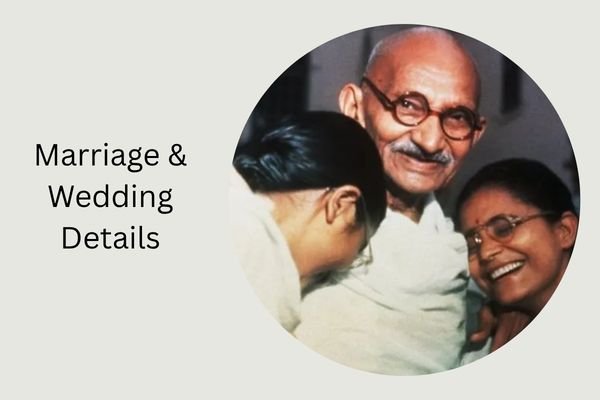
Mahatma Gandhi and Kasturba Gandhi married in 1883 in Gujarat when both were approximately 13 years old. Their marriage reflected the customs of their time rather than the expectations of modern marriage. The Gandhi Heritage Portal records the marriage as taking place in 1883 and states that their married life began at the Gandhi family home in Rajkot.
There is no reliable basis for describing their wedding using the kind of celebrity details commonly found in modern wedding coverage, such as designer clothing, guest lists, luxury venues, or wedding costs.
Their marriage became historically significant because it unfolded alongside Gandhi’s transformation from a young lawyer into a major leader of India’s independence movement.
Kasturba accompanied Gandhi through several major stages of his life. She lived through his years in South Africa, his return to India in 1915, the creation of ashrams, civil resistance campaigns, imprisonment, and the final years of the independence struggle.
Their relationship therefore became intertwined with one of the most important political movements of the 20th century.
Children & Family Life
Mahatma Gandhi and Kasturba Gandhi had four sons: Harilal, Manilal, Ramdas, and Devdas Gandhi.
The Gandhi Heritage Portal’s chronology records the births of their sons over several years. Harilal Gandhi was born in 1888, Manilal Gandhi in 1892, Ramdas Gandhi in 1897, and Devdas Gandhi in 1900.
Raising four children while living an increasingly demanding public life was challenging. Gandhi’s political work frequently required long periods away from home, travel, imprisonment, and strict personal discipline.
The family lived in different environments, including Gandhi’s communities and ashrams. Their children grew up around Gandhi’s experiments with simple living, education, self-discipline, and community service.
Kasturba’s family role was especially important because Gandhi’s public responsibilities increased dramatically after his return from South Africa. She helped maintain the household and participated in community activities while also dealing with the difficulties faced by the family.
The Gandhi Heritage Portal maintains a family tree documenting Gandhi and Kasturba and their descendants, reflecting the historical importance of their family.
Kasturba’s relationship with her children also experienced difficulties, particularly as Gandhi’s ideals and public responsibilities influenced family decisions. Their family history is therefore complex and cannot be reduced to a simple story of a famous leader and his wife.
Kasturba Gandhi’s Role in India’s Freedom Movement
Kasturba Gandhi’s contribution to the freedom movement deserves special attention. She was not merely a person who accompanied Gandhi. She participated in campaigns and accepted imprisonment for political causes.
Her involvement in South Africa was an important early stage of her activism. In 1913, she participated in resistance activities and was arrested. The Gandhi Heritage Portal records that she received a three-month rigorous imprisonment sentence.
In India, she continued to support constructive programs associated with Gandhi. She was involved in work related to sanitation, women’s participation, social equality, and life in Gandhi’s ashrams.
Kasturba also became an example of women’s involvement in the independence movement. Women played an increasingly visible role in protests, boycotts, social campaigns, and civil disobedience, and Kasturba was among those who accepted personal risks for the cause.
Her political activism became particularly significant because she was able to use her position and public visibility to encourage other women to participate.
The image of Kasturba standing beside Gandhi has sometimes overshadowed her own achievements. However, historical records show that she experienced imprisonment and political hardship herself.
Her life demonstrates that the independence movement was not carried only by famous male political leaders. Many women contributed through activism, organizing, community service, protest, and personal sacrifice.
Kasturba Gandhi’s Final Years and Death
Kasturba Gandhi spent her final years amid the intense political struggle surrounding India’s independence.
During the Quit India Movement, Gandhi and several members of his close circle were detained by the British authorities. Kasturba was detained with Gandhi at the Aga Khan Palace in Pune.
Her health deteriorated while she was imprisoned. She died on 22 February 1944 at the Aga Khan Palace.
Her death occurred several years before India achieved independence in August 1947. Gandhi was with her during her final period, and her death became one of the great personal tragedies of his later life.
Kasturba’s death also strengthened her historical legacy. The woman remembered as Gandhi’s wife had herself endured political repression, imprisonment, separation, and difficult living conditions during the independence struggle.
Today, the Aga Khan Palace in Pune is associated with important episodes in Gandhi’s life and the final years of Kasturba Gandhi.
Kasturba Gandhi’s Legacy
Kasturba Gandhi’s legacy extends beyond her marriage to Mahatma Gandhi. She is remembered as a freedom fighter, social reformer, community worker, and participant in India’s independence movement.
Her story is particularly important because it highlights the role of women in the freedom struggle. While Gandhi became internationally famous for his philosophy of nonviolence, Kasturba participated in the practical and often difficult work surrounding that movement.
She endured imprisonment and supported social initiatives connected with Gandhi’s ashrams. Her life also demonstrates how women of the period could move from traditional family roles into public activism.
The Gandhi Heritage Portal preserves extensive material about Gandhi and Kasturba, including a dedicated family tree and historical publications about their life together.
Kasturba is also remembered through memorials, institutions, books, and educational programs in India.
Her contribution is especially meaningful when viewed in the context of the limitations faced by women during the late 19th and early 20th centuries. She did not have the same opportunities that many women have today, yet she became involved in a major national movement.
Her life remains an example of courage, endurance, and public service.
Kasturba Gandhi on Social Media
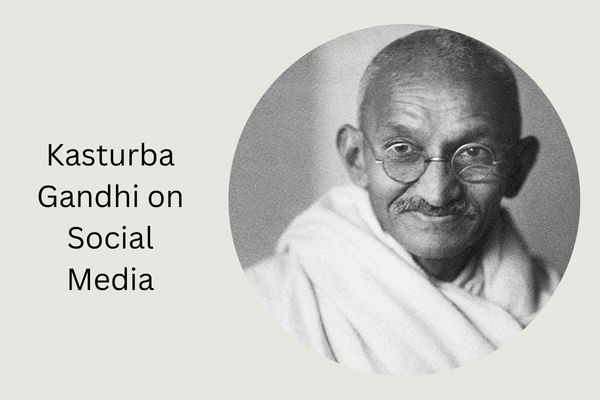
Kasturba Gandhi lived from 1869 to 1944, decades before the invention of the internet and modern social media. Therefore, she did not have Instagram, Facebook, X, or any verified social-media account.
Any modern social-media pages using her name should not automatically be considered official accounts. Historical information about Kasturba is better obtained from recognized archives, museums, books, and institutions dedicated to Gandhi’s life and the Indian independence movement.
The Gandhi Heritage Portal is one useful historical resource. It provides information about Gandhi’s life, family, writings, events, heritage sites, and related archival material.
For SEO content, it is important not to invent a follower count or claim that Kasturba herself maintained a social-media presence.
Quick Facts About Kasturba Gandhi
| Detail | Info |
|---|---|
| Full Name | Kasturba Gandhi (Kasturbai Kapadia) |
| Date of Birth | 11 April 1869 |
| Birthplace | Porbandar, Gujarat |
| Nationality | Indian |
| Known For | Freedom movement and social reform |
| Married to | Mohandas Karamchand Gandhi |
| Marriage Year | 1883 |
| Children | Harilal, Manilal, Ramdas and Devdas Gandhi |
| Date of Death | 22 February 1944 |
| Place of Death | Aga Khan Palace, Pune |
| Profession | Freedom activist and social reformer |
| Net Worth | Not applicable / no reliable historical figure |
Frequently Asked Questions About Mahatma Gandhi’s Wife
Q: Who was Mahatma Gandhi’s wife?
A: Mahatma Gandhi’s wife was Kasturba Gandhi, originally Kasturbai Kapadia. She was an Indian freedom fighter and social reformer who participated in the independence movement.
Q: How old was Kasturba Gandhi when she married Gandhi?
A: Kasturba Gandhi was about 13 years old when she married Mohandas Karamchand Gandhi in 1883. Gandhi was also around 13 at the time.
Q: What did Kasturba Gandhi do for a living?
A: Kasturba did not have a conventional modern profession. She was known for her social work, participation in the freedom movement, community service, and involvement in Gandhi’s ashrams.
Q: When did Mahatma Gandhi and Kasturba Gandhi get married?
A: Mahatma Gandhi and Kasturba Gandhi married in 1883 in Gujarat. Their married life began at the Gandhi family home in Rajkot.
Q: How many children did Mahatma Gandhi and Kasturba Gandhi have?
A: Mahatma Gandhi and Kasturba Gandhi had four sons: Harilal, Manilal, Ramdas, and Devdas Gandhi.
Q: When did Kasturba Gandhi die?
A: Kasturba Gandhi died on 22 February 1944 at the Aga Khan Palace in Pune while she was detained during the independence struggle.
Q: Was Kasturba Gandhi involved in the freedom movement?
A: Yes. Kasturba Gandhi participated in civil resistance and was imprisoned for her activities. Her arrest in South Africa in 1913 is one documented example of her direct involvement.
Conclusion
Mahatma Gandhi’s wife, Kasturba Gandhi, was an important figure in her own right. Born in Porbandar in 1869, she married Gandhi in 1883 and eventually became involved in his social and political work. She participated in resistance campaigns, endured imprisonment, supported community programs, and raised four sons while living through decades of political upheaval.
Her death in 1944 came before India achieved independence, but her contribution remained an important part of the freedom movement’s history. Understanding Kasturba’s life gives a fuller picture of Gandhi’s personal journey and the sacrifices made by women during India’s struggle for freedom. Her courage, resilience, and commitment to service continue to make her a respected historical figure.